
Public Explainer: Why We Are Calling for Fair Treatment for Investment & Pension Fraud Victims
5 December 2025

What’s happening?


Many ordinary people across the UK have lost their life savings, pensions, or investments after being misled, mis-sold to, or defrauded.

Now, on top of those losses, many are facing large and often life-changing tax bills from HMRC — even though they were the victims, not the perpetrators.


These include:

1. People caught in failed or fraudulent pension schemes

2. People misled into investment tax structures they did not understand

3. Victims formally classified as victims of crime by the police

4. Many others pushed into schemes by unregulated or poorly regulated advisers


For many, these tax bills arrive years — sometimes more than a decade — after the events, and with no special protection, no write-offs, and almost no recognition of their victim status.


Why are people being taxed if they were victims?


Under current UK tax rules, even if someone is tricked into a scheme later found to be fraudulent or abusive, HMRC can still treat the payments they received as taxable — even if the person never benefited, lost money, and was misled throughout. This is because there is no framework or policy in place currently recognising victim status in UK tax matters. 


That means victims can be told:

  • They owe tens of thousands of pounds, or even more
  • They have 30 days to pay or enter long-term repayment plans
  • Interest and penalties may apply for over a decade 
  • Bankruptcy could follow if they cannot pay

For many people already ruined by fraud, this is devastating.


What changed with the Loan Charge — and why it matters now

In 2025, the Government accepted the Independent Loan Charge Review, which admitted that:


HMRC’s approach had caused “significant and unacceptable harm”

Many people were mis-sold schemes

Enforcing the full tax was unfair and disproportionate


As a result, the Government announced:

50%+ reductions in many Loan Charge tax bills

Around 30% will have their tax completely written off

Penalties and interest removed

An extra £5,000 written off for everyone affected.


This was a major shift:

For the first time, the UK accepted that legally-due tax can be reduced or written off when people were misled or harmed.


We believe the same principle must now be applied to fraud victims.


Why this is urgent?


Many fraud victims are now receiving tax bills:

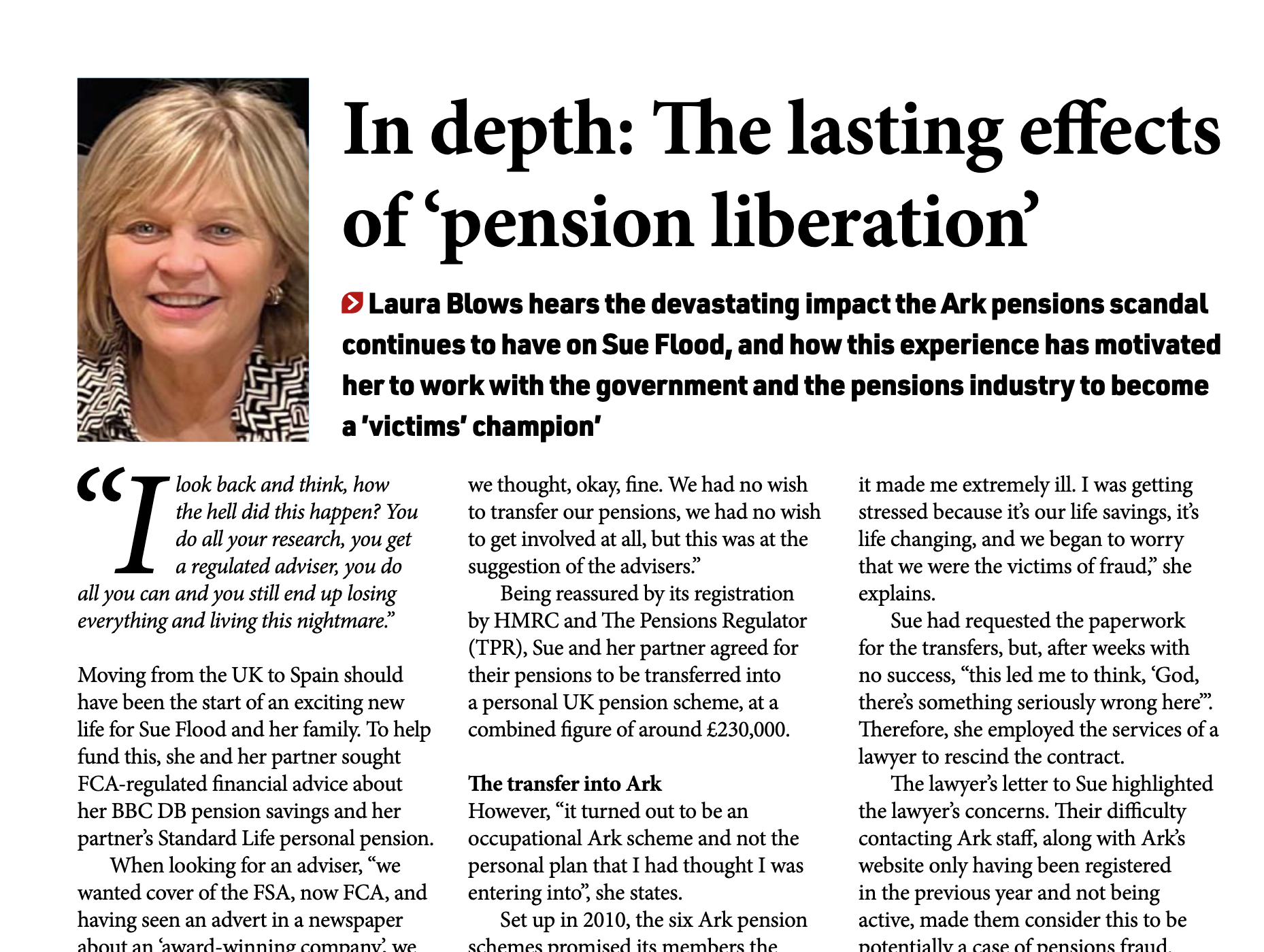
Ark pension victims are getting assessments with 30 days to pay

Some still cannot get final tax calculations even after 15 years

Others face bankruptcy or homelessness.


The “V11” footballers — recognised by police as victims of crime — still face multi-million pound tax bills on top of huge financial losses.


These people did nothing wrong.

They acted in good faith.

They were badly let down by advisers, weak regulation, and a system that did not protect them.


How other countries protect victims:


Other nations do better:


Australia

After a national investigation, the Australian Tax Office created a Vulnerability Framework to protect people harmed by financial abuse. This allows:

- Tax debts to be reduced, deferred or written off

- Special teams trained to identify and support victims

• A system that avoids adding harm to people already harmed


United States

After the Bernie Madoff scandal, the US introduced special tax reliefs for ponzi fraud victims. The US also have created:

- A statutory Taxpayer Bill of Rights

• An independent Taxpayer Advocate Service


These ensure the tax system does not punish victims.

The UK currently has none of these protections.


What we are calling for:

We want to ensure victims of fraud are treated fairly, humanely, and consistently.


We are calling for:

1. An Independent Review

A full review of how HMRC treats investment and pension fraud victims.

2. Immediate protection from harsh enforcement

Stopping bankruptcies, home repossessions and unaffordable tax demands for recognised victims of fraud.

3. A UK Taxpayer Bill of Rights

A simple, fair set of protections ensuring vulnerable people are not harmed again by the tax system.


What you can do: 


If you or someone you know has been affected:

Contact the Investment Fraud Committee 

Ask your local MP to support a fair review for fraud victims

Share your story — it helps us push for change.


No victim should be punished for being misled or defrauded.

It’s time for a fair system that recognises and protects victims — not one that harms them again.

17 December 2025
Last week, a powerful moment unfolded in the heart of British democracy — the launch of the V11 Foundation at Parliament. Eleven former Premier League footballers, known collectively as the V11, stood together not to celebrate sporting victories, but to demand justice — and to call for meaningful reform in the laws that currently leave victims of financial wrongdoing in limbo. Who Are the V11? The V11 Foundation represents a group of former professional footballers who, having earned their livelihoods on the pitch, fell victim to complex investment schemes marketed as secure and beneficial. These schemes — marketed in the 1990s and 2000s — eventually collapsed, leaving the players facing enormous tax penalties from HM Revenue & Customs (HMRC) despite being recognised as victims of fraud by law enforcement. Instead of being protected, many have been left grappling with mounting liabilities, bankruptcies, lost assets, and ongoing stress. Their experience has drawn comparisons to other high-profile scandals where ordinary people were failed by the system, highlighting deep structural issues in how fraud victims are treated by law and enforcement. A Letter to the Prime Minister Following the Parliament launch, the V11 Foundation sent a heartfelt letter to the Prime Minister, urging urgent action on their behalf. In that letter, they appealed for government intervention to address the unjust consequences they continue to face — even after official recognition as victims. The crux of their appeal centres on one key point: If someone is officially recognised as a victim of criminal wrongdoing, they should not continue to be pursued for penalties directly resulting from that wrongdoing. Their letter calls on the Prime Minister to ensure fairness in how tax liabilities are assessed and enforced when fraud is at the core of the loss — and to reconsider how the law currently treats such cases. Launching a Foundation — But Also a Movement The V11 Foundation isn’t just a support group for the individuals affected; it’s a movement aimed at championing change. At Parliament, the former players shared powerful testimony about how their financial futures were derailed by what they described as manipulative advisers and opaque schemes. Their aim is clear: to ensure that no other athlete, or any individual, is left unprotected and left alone to fight an uphill battle when they fall victim to financial fraud. IFC’s Commitment to Working Together for Reform The Investment Fraud Committee — welcomes the formation of the V11 Foundation and stands in solidarity with its mission. We believe: Fair treatment under the law should include recognition of victim status in all related legal, tax and financial consequences. Regulatory reform is needed to close gaps that allow mis-selling and unregulated investment schemes to flourish. Stronger protections and clearer avenues for redress must be established for victims of financial wrongdoing. Our campaign will focus on collaborating with the V11 Foundation to lobby Parliament, engage with policymakers, and raise public awareness of the systemic issues highlighted by the V11’s story. We see their struggle not only as a matter of individual justice, but as a broader call for reform — one that intersects with financial regulation, taxpayer fairness, criminal justice, and the rights of victims. A Call to Action The launch of the V11 Foundation and the subsequent appeal to the Prime Minister mark a pivotal moment in the fight for fairness and accountability. The IFC is proud to work alongside the V11 in campaigning for much-needed reform. Together, we will continue to: Amplify the voices of victims Engage lawmakers on statutory changes Promote financial protections for sportspeople and the wider public Justice doesn’t just mean recognition — it means changing the system so fewer people have to suffer the same fate.
3 December 2025
The recent Budget delivered something almost unprecedented: a recognition from both HMRC and the Treasury that legally-due tax can be reduced or written off when enforcing it would be unfair, disproportionate or harmful. For victims of investment and pension fraud—many of whom are now facing crushing tax demands on top of catastrophic losses—this moment matters more than ever. 1. What Happened: A Major Shift in Tax Policy The Government has formally accepted the Independent Loan Charge Review 2025 and announced a sweeping new settlement for individuals caught in loan remuneration schemes. 👉 Review link: https://www.gov.uk/government/publications/loan-charge-independent-review/loan-charge-review Key features include: - 50%+ reductions in most Loan Charge liabilities - Full write-offs for around 30% of cases - An automatic £5,000 write-off for everyone in scope - Removal of penalties and most interest - Promoter fees excluded from tax calculations Crucially, the Review concludes that the Loan Charge caused: - “Significant and unacceptable harm” - Involved “individuals who were duped by promoters” - And that HMRC’s approach has not always been right - This is more than a technical adjustment. - It is a decisive policy shift in how the Government treats taxpayers who were misled, mis-sold to, or harmed by regulatory failures. 2. Why This Matters for Investment & Pension Fraud Victims Thousands of fraud victims—across collapsed investment schemes, pension scams, and highly-engineered tax structures—remain under aggressive HMRC pursuit for historic tax liabilities. And yet these victims are, in many ways, in a far stronger position than the Loan Charge cohort: - Some were classified as victims of fraud by police and regulators - Their losses have been devastating—in many cases wiping out life savings, pensions or entire career earnings - They often gained no financial benefit; instead, they suffered net losses - HMRC is offering no relief at all: only time-to-pay arrangements with decades of interest, penalties, or bankruptcy - This includes victims of pension schemes like Ark, investment schemes such as those promoted to professional athletes, and numerous others who were duped into complex structures by regulated advisers. Fraud victims have not been granted an independent review or settlement opportunity—and are being treated far more harshly. 3. The Parallels With the Loan Charge Are Unavoidable The justifications used to provide relief to loan scheme users apply equally to fraud victims, including: • Mis-selling and deception by advisers and promoters Victims were intentionally misled by individuals or firms regulated by the FCA or operating under the radar of an ineffective supervisory system. • Regulatory and supervisory failure Authorities repeatedly missed red flags—whether in pension transfers, unsuitable investments, or schemes later declared non-compliant. • Severe financial and mental-health harm Families have been devastated by years of uncertainty, loss, and unpayable demands. • Decades-long disputes Some victims have been trapped in HMRC disputes for 10–15 years, with no route to closure. • Inability to pay without life-changing consequences Many face insolvency, homelessness, or total loss of retirement security. If these exact factors justify 50–100% write-offs for individuals caught in the loan charge scandal… …then justice demands at least equivalent relief for victims who were defrauded and left with nothing. 4. Why This Is a Pivotal Opportunity for Parliament The Loan Charge settlement establishes a clear and powerful precedent which we support : Parliament can intervene to reduce or eliminate historic tax liabilities when fairness and proportionality require it—regardless of strict legal liability. This creates a direct opening for MPs to demand: • Full or partial tax exemptions for investment and pension fraud victims • Consistency in policy: fraud victims must not be treated worse than other tax payers • An independent review specifically into HMRC’s treatment of fraud victims At present, the inconsistencies are indefensible: - Identity fraud victims already receive exemptions. - Investment and pension fraud victims receive nothing—even though enforcement for some schemes (e.g., Ark) is expected immediately after Christmas. - Victims currently face a binary and brutal choice: ❌ Decades of interest and penalties through time-to-pay ❌ Bankruptcy ❌ No exemptions, no IVAs, no hardship relief, no recognition of fraud ❌ No action against the perpetrators This cannot be allowed to stand. 5. The Bottom Line The Government now accepts that pursuing full historic tax bills in cases involving: - mis-selling, - deception, - regulatory failure, and - human harm - is unfair and disproportionate. That principle must apply consistently. The Loan Charge settlement is a historic and welcome breakthrough—and a compelling foundation for demanding equivalent protection for all investment and pension fraud victims. Fraud victims deserve an independent review. They deserve parity. And they deserve justice. The Investment Fraud Committee will be calling on the Government to establish this review immediately. Allowing HMRC to proceed with post-Christmas enforcement against devastated fraud victims would be morally impossible to justify.  This is the moment for Parliament to act.