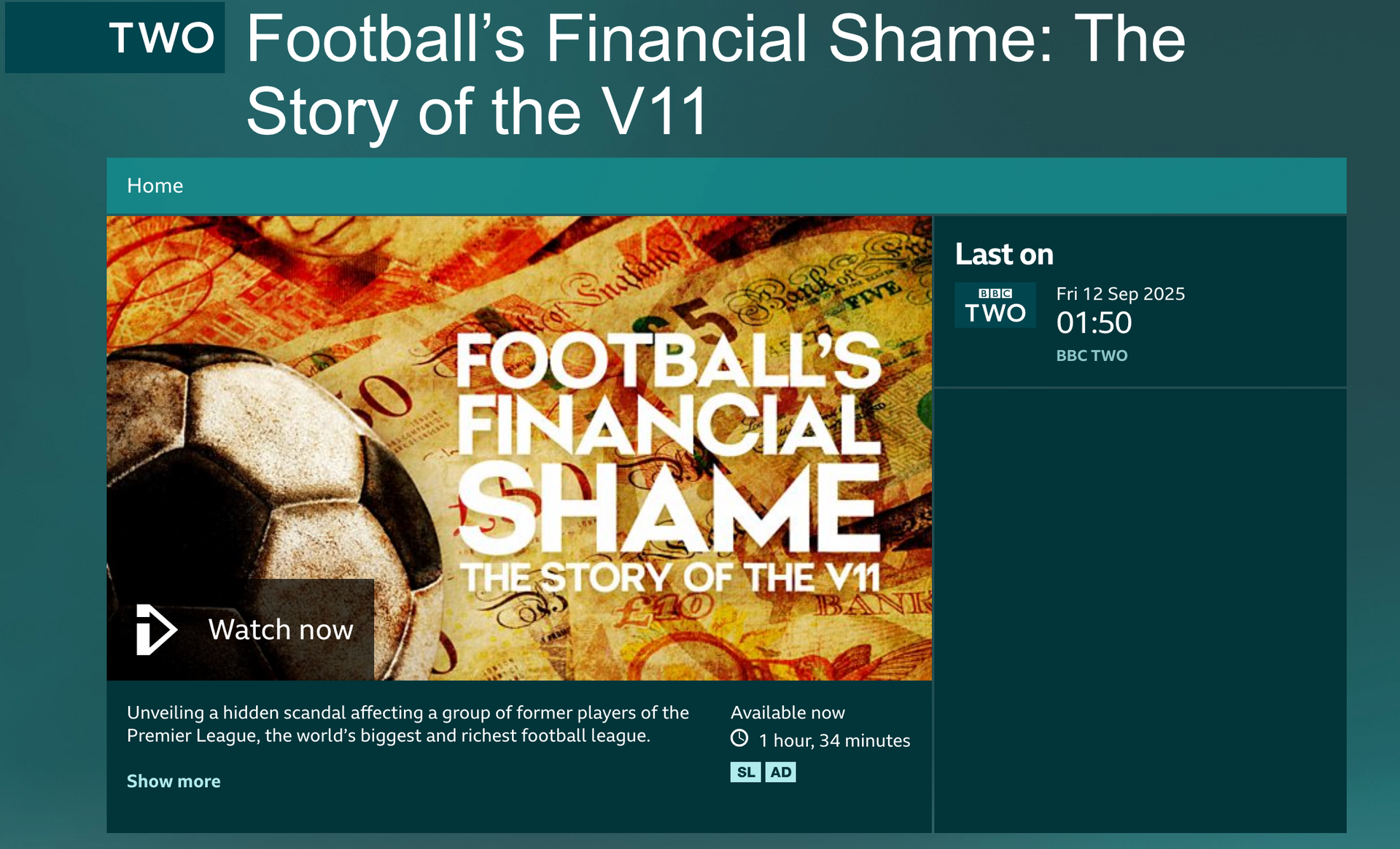
Case Study — Football’s Financial Shame: The Story of the V11
Overview
In September 2025, the BBC aired Football’s Financial Shame: The Story of the V11, a documentary that brought public attention to a group of former Premier League footballers who say they suffered significant financial harm after investing in complex schemes promoted by advisers in the 1990s and 2000s.
The players — known collectively as the “V11” — reported losing millions of pounds, facing large tax liabilities, and experiencing long-lasting personal and financial difficulties. Many of them now campaign with the Investment Fraud Commitee for legal and policy reform to prevent similar harm to other athletes and wider victims.
What Happened
According to media coverage and the documentary:
• Former players were encouraged to invest in film-financing schemes and overseas property that were originally promoted with significant tax incentives.
Over time the value of these investments fell, and by the early 2000s both the schemes and related tax reliefs were challenged by HM Revenue & Customs (HMRC).
• Although some investigations by the City of London Police identified evidence of potential wrongdoing, they did not result in criminal convictions. Those involved were nevertheless left with substantial tax bills and penalties.
• Participants described how the consequences included significant losses, the sale of homes, bankruptcy proceedings, and ongoing disputes with tax authorities.
• This case is often described in terms of “financial grooming” — where individuals with limited financial literacy are drawn into complex arrangements by advisers they trusted.
However, firms and advisors associated with these investments have denied wrongdoing, and legal positions have varied over time.
Coverage emphasises that these are reports and claims, not judicial findings of fraud in every case.
Wider Systemic Issues Highlighted:
The V11 case is significant not only for the individual harm described, but because it points to wider, unresolved problems in the intersection of sport, financial advice, tax enforcement, and redress:
1. Vulnerability of Professional Athletes
Sudden wealth, short careers, and reliance on advisers can make athletes especially vulnerable to complex and high-risk products that they do not fully understand.
2. Unresolved Tax Disputes and Enforcement Outcomes
Players affected by these arrangements have faced continued tax liabilities from HMRC despite assertions that they were victims of mis-selling. Critics argue the system does not sufficiently differentiate between victims of financial crime and misselling and genuine tax avoiders.
3. Limited Avenues for Redress
Although the V11 were described by police as victims of crime, there has been no comprehensive process for compensation or systemic resolution for all those affected.
4. Emotional and Health Impacts
Public accounts and media reporting have highlighted the personal toll on individuals, including stress, loss of mental wellbeing, and long-term life disruption.
Why This Matters to the Investment Fraud in Sport Panel
Cases like the V11 story underline why systemic reform is needed — not just for individuals, but to protect future athletes and safeguard the integrity of sport’s financial ecosystem.
They point to failures in:
• Financial advice regulation
Safeguards for high-risk investors
• Clearer distinctions between fraud victims and enforcement subjects
• Support and redress pathways for those harmed by mis-selling
Addressing these broader issues is central to the Panel’s remit.