The recent Budget delivered something almost unprecedented: a recognition from both HMRC and the Treasury that legally-due tax can be reduced or written off when enforcing it would be unfair, disproportionate or harmful.
For victims of investment and pension fraud—many of whom are now facing crushing tax demands on top of catastrophic losses—this moment matters more than ever.
1. What Happened: A Major Shift in Tax Policy
The Government has formally accepted the Independent Loan Charge Review 2025 and announced a sweeping new settlement for individuals caught in loan remuneration schemes.
👉 Review link: https://www.gov.uk/government/publications/loan-charge-independent-review/loan-charge-review
Key features include:
- 50%+ reductions in most Loan Charge liabilities
- Full write-offs for around 30% of cases
- An automatic £5,000 write-off for everyone in scope
- Removal of penalties and most interest
- Promoter fees excluded from tax calculations
Crucially, the Review concludes that the Loan Charge caused:
- “Significant and unacceptable harm”
- Involved “individuals who were duped by promoters”
- And that HMRC’s approach has not always been right
- This is more than a technical adjustment.
- It is a decisive policy shift in how the Government treats taxpayers who were misled, mis-sold to, or harmed by regulatory failures.
2. Why This Matters for Investment & Pension Fraud Victims
Thousands of fraud victims—across collapsed investment schemes, pension scams, and highly-engineered tax structures—remain under aggressive HMRC pursuit for historic tax liabilities.
And yet these victims are, in many ways, in a far stronger position than the Loan Charge cohort:
- Some were classified as victims of fraud by police and regulators
- Their losses have been devastating—in many cases wiping out life savings, pensions or entire career earnings
- They often gained no financial benefit; instead, they suffered net losses
- HMRC is offering no relief at all: only time-to-pay arrangements with decades of interest, penalties, or bankruptcy
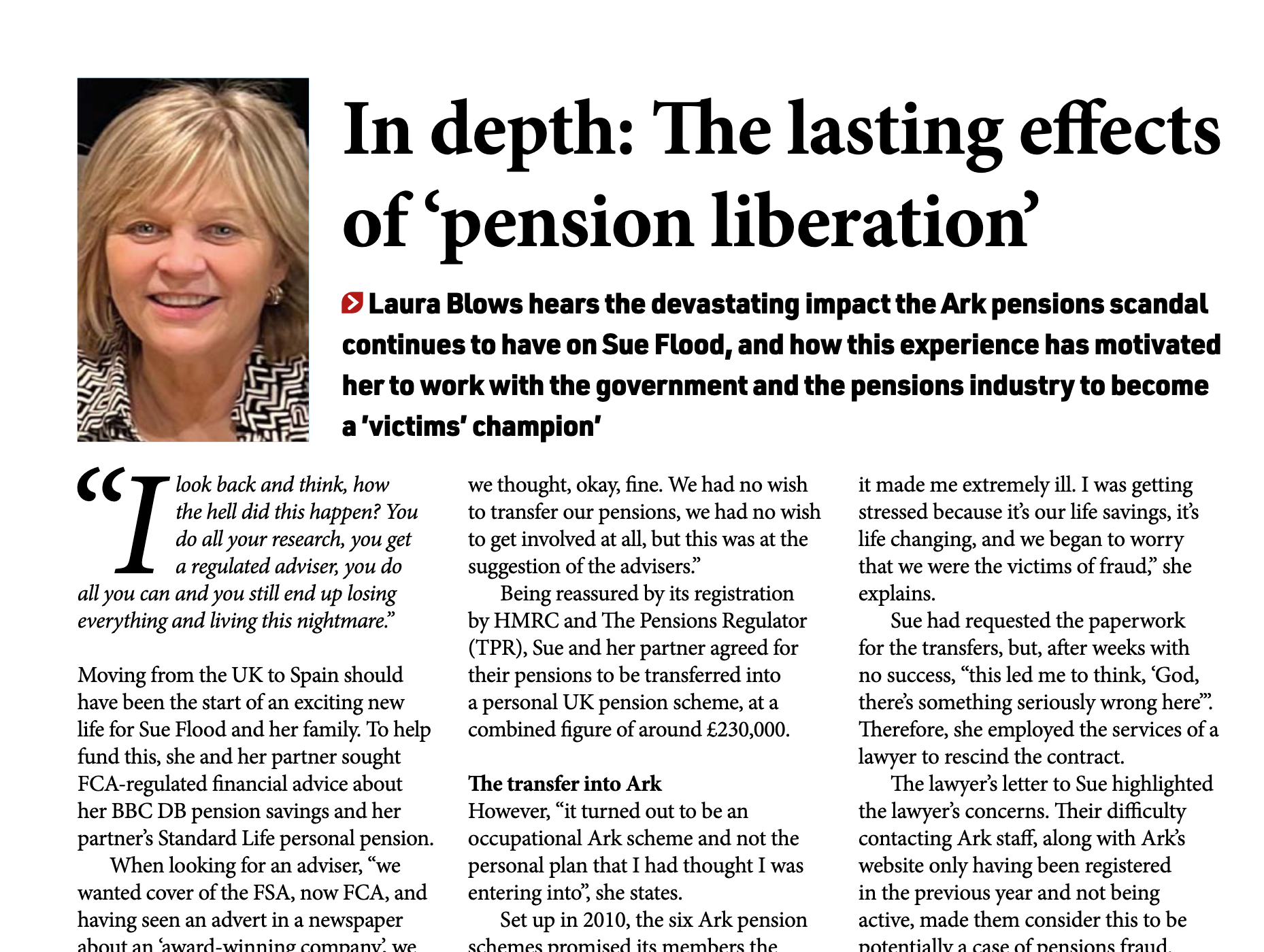
- This includes victims of pension schemes like Ark, investment schemes such as those promoted to professional athletes, and numerous others who were duped into complex structures by regulated advisers.
Fraud victims have not been granted an independent review or settlement opportunity—and are being treated far more harshly.
3. The Parallels With the Loan Charge Are Unavoidable
The justifications used to provide relief to loan scheme users apply equally to fraud victims, including:
• Mis-selling and deception by advisers and promoters
Victims were intentionally misled by individuals or firms regulated by the FCA or operating under the radar of an ineffective supervisory system.
• Regulatory and supervisory failure
Authorities repeatedly missed red flags—whether in pension transfers, unsuitable investments, or schemes later declared non-compliant.
• Severe financial and mental-health harm
Families have been devastated by years of uncertainty, loss, and unpayable demands.
• Decades-long disputes
Some victims have been trapped in HMRC disputes for 10–15 years, with no route to closure.
• Inability to pay without life-changing consequences
Many face insolvency, homelessness, or total loss of retirement security.
If these exact factors justify 50–100% write-offs for individuals caught in the loan charge scandal…
…then justice demands at least equivalent relief for victims who were defrauded and left with nothing.
4. Why This Is a Pivotal Opportunity for Parliament
The Loan Charge settlement establishes a clear and powerful precedent which we support :
Parliament can intervene to reduce or eliminate historic tax liabilities when fairness and proportionality require it—regardless of strict legal liability.
This creates a direct opening for MPs to demand:
• Full or partial tax exemptions for investment and pension fraud victims
• Consistency in policy: fraud victims must not be treated worse than other tax payers
• An independent review specifically into HMRC’s treatment of fraud victims
At present, the inconsistencies are indefensible:
- Identity fraud victims already receive exemptions.
- Investment and pension fraud victims receive nothing—even though enforcement for some schemes (e.g., Ark) is expected immediately after Christmas.
- Victims currently face a binary and brutal choice:
❌ Decades of interest and penalties through time-to-pay
❌ Bankruptcy
❌ No exemptions, no IVAs, no hardship relief, no recognition of fraud
❌ No action against the perpetrators
This cannot be allowed to stand.
5. The Bottom Line
The Government now accepts that pursuing full historic tax bills in cases involving:
- mis-selling,
- deception,
- regulatory failure, and
- human harm
- is unfair and disproportionate.
That principle must apply consistently.
The Loan Charge settlement is a historic and welcome breakthrough—and a compelling foundation for demanding equivalent protection for all investment and pension fraud victims.
Fraud victims deserve an independent review.
They deserve parity.
And they deserve justice.
The Investment Fraud Committee will be calling on the Government to establish this review immediately.
Allowing HMRC to proceed with post-Christmas enforcement against devastated fraud victims would be morally impossible to justify.
This is the moment for Parliament to act.